About

No one with deep enough collecting experience had built it. So a collector did.

The moment a serious collector tried to show someone their collection — and all they could pull up was a spreadsheet and a camera roll — the gap became undeniable. Not a technology gap. An understanding gap.

Origin

Every tool in collectibles was built from the wrong starting point. Not the wrong technology. The wrong understanding.

Some started with a database and bolted collecting onto it. Some started with a marketplace and treated the collection as transaction history. Some started with a portfolio model and saw every piece as a ticker symbol. Each competent in their domain. None started from how a serious collector actually thinks, documents, values, and presents what they own.

The result is a collector base managing their most significant pursuit across jury-rigged systems — spreadsheets with custom formulas, camera rolls that are half archive and half chaos, Facebook Groups where half the posts are scam accounts, and an average of two or three abandoned apps that each promised everything and delivered a generic database.

Vitrine was created to be the first platform that started from the collector's actual workflow — the Sunday comp check, the subcategory-specific documentation, the desire to present pieces the way they exist in the collector's head — and built every layer of architecture to serve it. Not a database with a collecting skin. Not a marketplace bolting on inventory. A collector-native environment from the data model up.

What we built — and how

Three commitments no competitor would make.

01

Field-level depth over database breadth

Rather than indexing millions of items with generic fields, Vitrine builds dynamic documentation that changes by subcategory — because a game-worn jersey and a factory-sealed box require completely different documentation. No category gets marketed until a specialist collector validates the taxonomy. Slower expansion. Fewer categories on the marketing page. A depth standard that’s publicly visible.

02

Gallery-quality presentation as architecture

Every surface that displays a collector’s items is held to the standard of a curated exhibition. A spreadsheet row is a form of disrespect to a piece someone spent years finding. The visual standard runs through every surface — catalog, showcases, sharing, profile.

03

Radical, verifiable honesty

Real metrics or no metrics. Planned features described as planned — in marketing, in investor conversations, on this page. In a category where every startup inflates to survive, this commitment costs real credibility in fundraising rooms. We made it anyway — because the alternative is joining the graveyard of platforms that lied their way in.

Beliefs

The convictions the product is built on.

Every platform in collectibles split the collector in half — passion or portfolio — and built for the half that’s easier to monetize. The complete collector has never been served.

Category depth is measured at the field level, not the label level. An app that says “Baseball” but can’t distinguish a game-worn jersey from a factory-sealed box has built a label, not a category.

Presentation is not cosmetic. A collection displayed as a spreadsheet row is a collection being disrespected. The way a collector’s pieces are shown IS the utility.

Claiming a capability that doesn’t exist is the fastest way to join the collector app graveyard. This audience verifies claims within minutes and remembers permanently.

Cross-category collectors are not a niche. They are the natural state of serious collecting — abandoned by an industry that found it easier to build vertically than solve the actual problem.

Roadmap

Where we are and where we're headed — without blurring the line.

What's live today

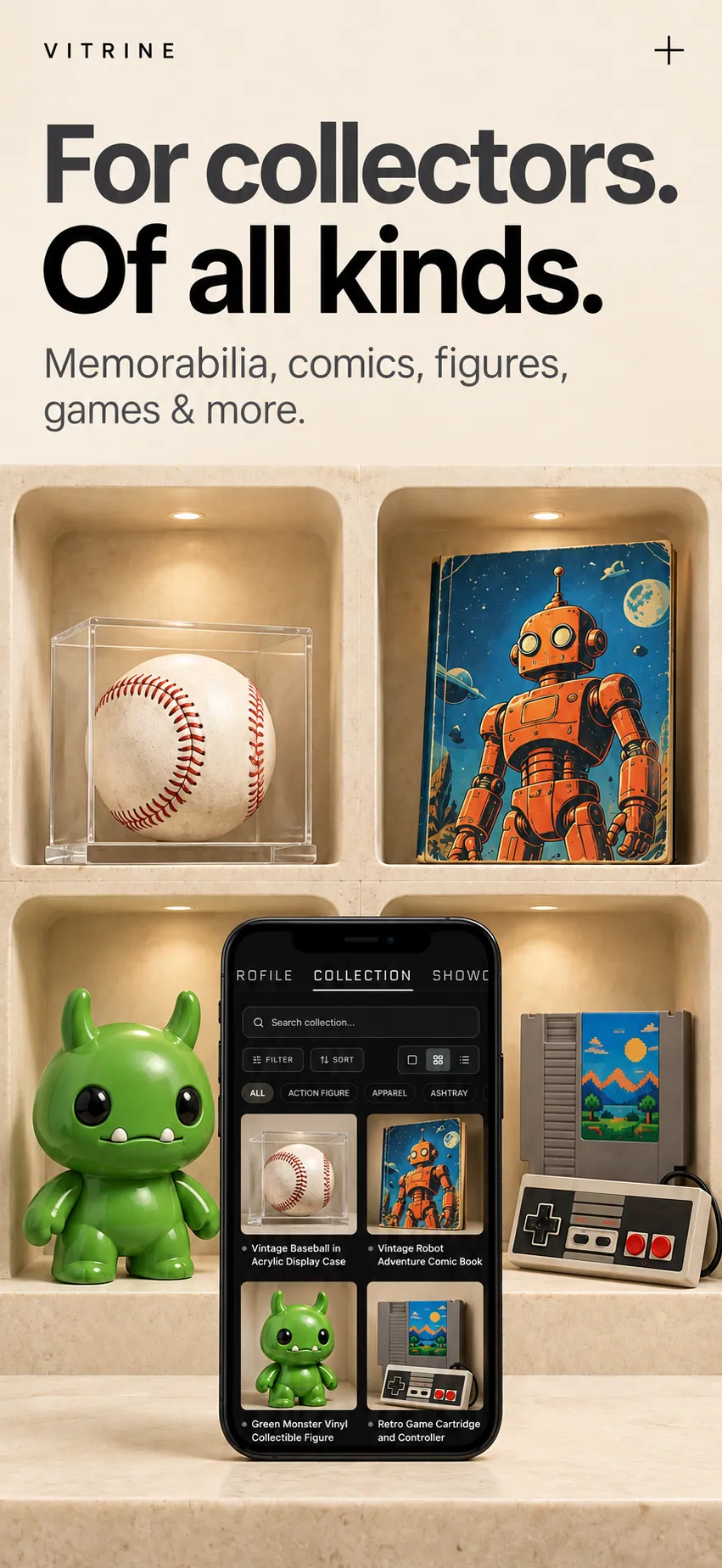
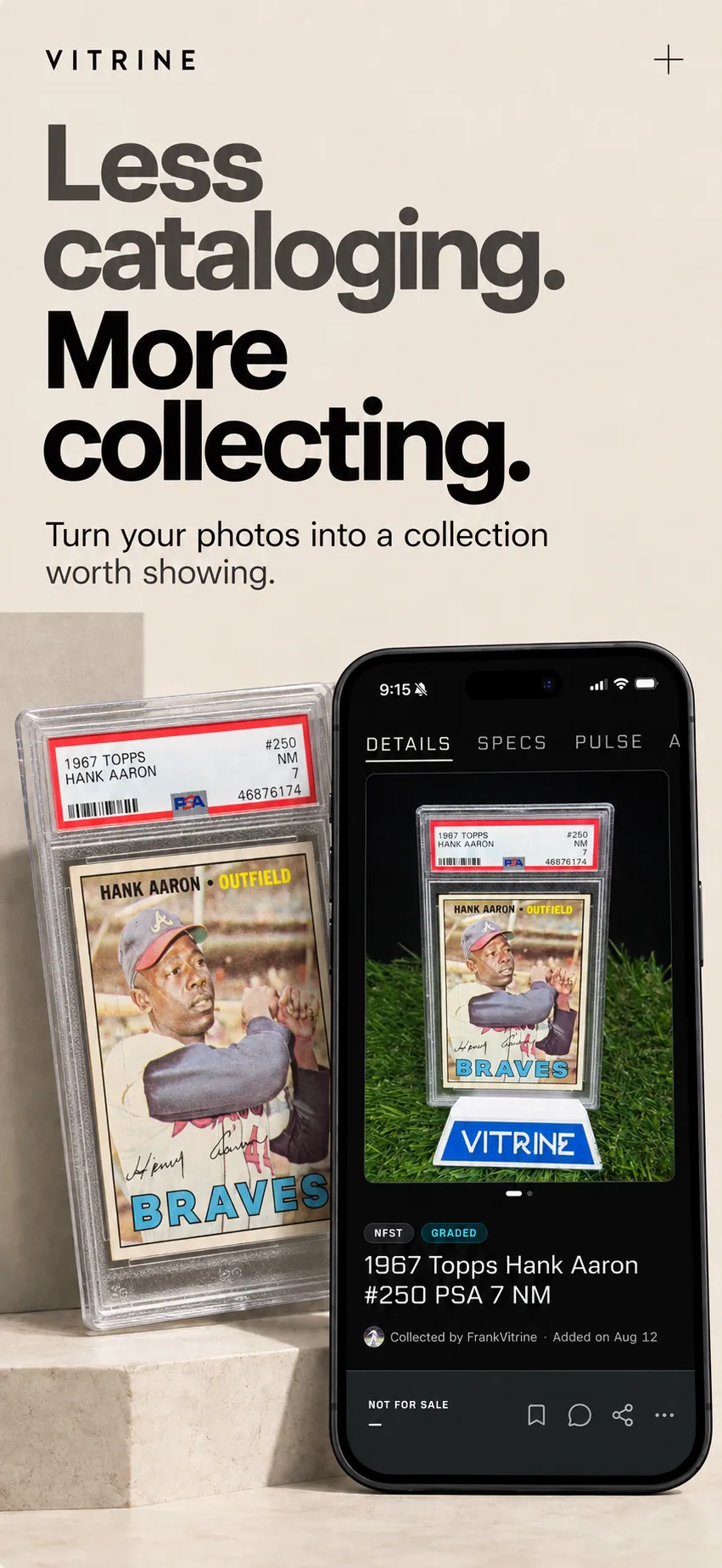
Collection management with dynamic fields per subcategory
Gallery-quality showcases — public, private, shareable
Tracking — track any item, tag your intent, get alerts when things change
Collector profiles where the collection is the identity
Community groups
Direct messaging with item and showcase embedding
Consolidated value tracking from comp sources
Cross-platform — iOS, Android

In development

Integrated marketplace — collector-to-collector transactions with authentication
Verification Hub — connecting collectors with vetted authenticators
Screenshot placeholder

Built for how you
actually collect.

Free on iOS and Android. No credit card. No item limits.